











Our fellowship of churches, the Mennonite Brethren, is a peculiar group.
For one thing, our name is peculiar. The last part, “Brethren,” is a somewhat archaic term; we don’t use it in contemporary language. I would never say, “My brethren are all older than I am.” I would say, instead, “My brothers are all older than I am.” And we would not use the term “brothers” to refer to a group that includes both our brothers and sisters. We would use the word “siblings” or the phrase “brothers and sisters” instead. So “Brethren” is a little bit peculiar.
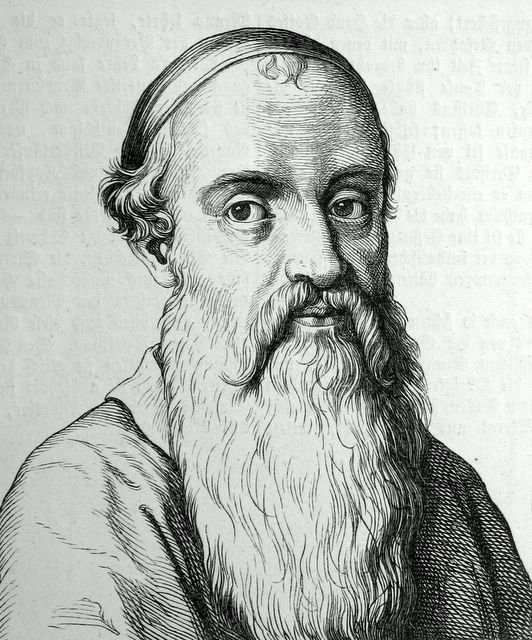
And the term “Mennonite” is at least as peculiar, if not more so. It derives from the name of a 16th century church reformer named Menno Simons.
Who was Menno Simons?
Even in Mennonite circles, many do not know anything about Menno; in the wider Christian community, fewer know about him. And in the non-Christian world, he is virtually unknown. At best, the word “Mennonite” may conjure up images of women in bonnets, bearded men with suspenders and horse-drawn buggies. So who was this obscure figure whom our family of churches is named after?
Menno Simons was a Dutch priest who left the Roman Catholic Church and became a leader of a group of believers who maintained that a person should only be baptized after an informed confession of faith in Jesus. These believers rejected the practice of infant baptism. Many (perhaps all) of these believers were baptized as infants and chose to be baptized again as adults after they had made a decision to follow Jesus. Hence, they were called “Anabaptists,” those who are baptized again.
Some of the early proponents of Anabaptism believed that it was permissible to use violence and bloodshed to establish a community of true believers, giving the movement a bad reputation early on. Menno was a leading voice in rejecting the use of violence. His teaching and life changed the trajectory of the movement and caused Anabaptists to hold him in high esteem. Abram Friesen writes, “Through his example and preaching of the new birth, Simons transformed the movement.” For more on Menno Simons, check out the article “Humility and service” in the September/October issue of Christian Leader.
A light to the world
So, Mennonite Brethren have a peculiar name. But peculiar doesn’t just mean “weird” or “odd.” It also means “distinguishing,” “particular” or “notable.” For instance, we might say, “The peculiar genius of the American Constitution is the separation of powers.” Menno also helps us to be peculiar in this other sense of the term. One of the things that helps make us notable is Menno’s insight that in order to follow Jesus we should pay special attention to the Sermon on the Mount.
Consider these two brief sections of the Sermon on the Mount. In the first passage, Jesus tells his followers to “…let your light shine before others, that they may see your good deeds and glorify your Father in heaven” (Matt. 5:16). Shortly after, Jesus teaches, “Be careful not to practice your righteousness in front of others to be seen by them. If you do, you will have no reward from your Father in heaven” (Matt. 6:1). There is a tension between these two statements.
Let’s think together about how to live in such a way that we can be light to the world but not be self-promoting. We’ll consider some pairs of words and have our historical friend Menno help us. He has a well-known statement that begins, “For true evangelical faith is of such a nature that it cannot lie dormant, but manifests itself in all righteousness and works of love…” We’ll use Menno’s further insights into true faith to complement our thoughts.
Personal, not private
We want our faith to be personal, but not private. This first pair of words is not original to me. They are borrowed from Jim Wallis, American theologian, writer, teacher and activist. A disciple of Jesus must have a faith that is personal.
A personal faith is one that changes you from the inside. Your character is formed by the example of Jesus, whose character was one of self-sacrifice and authenticity. And an authentic faith is one that shines as a light. Menno says that same true evangelical faith “… dies unto the flesh and blood; it destroys all forbidden lusts and desires; it seeks and serves and fears God;.”
Our culture–like the Roman culture of Jesus’ day–is comfortable with a personal faith as long as you keep it to yourself, as long as it is private. But that is not the way of Jesus.
Political, not partisan
Second, we want our faith to be political, but not partisan. This might take a little bit of explaining.
One of the common complaints about American evangelicalism is that it is too political. I would like us to redeem the term politics, if possible. Politics is derived from the Greek word “polis,” which is the city or the community of which you are a part. Politics is seeking the good of your community. We want to be people that serve our communities.
Turning again to Menno’s words, he tells us the true evangelical faith “…clothes the naked; it feeds the hungry; it comforts the sorrowful; it shelters the destitute.” Being political, in this healthy sense of seeking the good of your community, is to be a light.
To be partisan is to trumpet your own strategies for seeking the good of your community. It is selfish, insisting on only your vision for the community. So we are led to our third pair of words.
Peacemakers, not power-grabbers
We should be peacemakers rather than power-grabbers.
Peacemakers influence through compassionate service while power-grabbers control by acts of coercion. Both peacemakers and power-grabbers might think they are seeking the good of their community. But the peacemaker is following the way of the suffering servant, Jesus. The peacemaker is taking the risk of losing. Here’s what Menno has to say to us: “True evangelical faith…returns good for evil…serves those that harm it…prays for those that persecute it…seeks that which is lost.”
The kind of faith that Menno describes is the kind of faith that is peculiar. It is both a light to the world and not self-promoting. It is the kind of faith to which Jesus calls us.
Simon’s true evangelical faith quote
Menno’s full quotation is peculiar, in both senses of the word. It is odd because it is a very long sentence. Writing teachers would not approve. But it is also notable. It provides us with a distinctive call to truly follow Jesus:
“For true evangelical faith is of such a nature that it cannot lie dormant, but manifests itself in all righteousness and works of love;
it dies unto the flesh and blood;
it destroys all forbidden lusts and desires;
it seeks and serves and fears God;
it clothes the naked;
it feeds the hungry;
it comforts the sorrowful;
it shelters the destitute;
it aids and consoles the sad;
it returns good for evil;
it serves those that harm it;
it prays for those that persecute it;
teaches, admonishes, and reproves with the Word of the Lord; it seeks that which is lost;
it binds up that which is wounded;
it heals that which is diseased and
it saves that which is sound;
it has become all things to all men.”

David Faber is professor of Bible and Religious Studies at Tabor College, the Mennonite Brethren college in Hillsboro, Kansas. He is a member of Ebenfeld MB Church, rural Hillsboro.






Interesting that Faber quotes Jim Wallis.
From Monergism.com/Jim-Wallis:
Why Jim Wallis Should Be Regarded as a False Teacher and Avoided
1. Promoting a Social Gospel Over the True Gospel of Jesus Christ
Jim Wallis’s primary emphasis is on the “social gospel,” which prioritizes societal change, political activism, and social justice over the biblical message of repentance, faith in Jesus Christ, and the need for individual salvation. While it is important for Christians to be concerned about social issues and care for the marginalized, Wallis often presents social activism as the core mission of the church, overshadowing the true Gospel message of salvation through Christ alone.
The Bible teaches that the true Gospel is centered on Christ’s life, death, and resurrection, which offers forgiveness of sins and reconciliation with God. Paul declared, “For I decided to know nothing among you except Jesus Christ and him crucified” (1 Corinthians 2:2). The mission of the church is to preach this Gospel and to call people to repentance and faith in Christ (Matthew 28:19-20; Romans 1:16). By shifting the focus from the saving work of Christ to political and social activism, Wallis leads people away from the central message of the Gospel, which is the only means of true transformation for individuals and society.
I wondered if the social justice stance begin in June, 2020 was still ongoing; this article answers that question. It’s sad that it’s also infiltrated Tabor along with FPU. It also affirms our decision made to leave the Mennonite Brethren in 2020. The Mennonite Brethren church used to be quite sound in their doctrine. Alas, that has changed.
Comments are closed.