







For decades, U.S. Mennonite Brethren have collaborated with immigrant congregations, including through Integrated Ministries, and most recently, through CORD.
Rick Eshbaugh, former Central District minister who was a member of USMB’s national ministry to immigrant churches, articulates a need for intentionality when assisting immigrant congregations.
“Going back in our Mennonite Brethren denominational history, we were immigrants,” Eshbaugh says. “We recognize that.”
Integrated Ministries is a precursor to CORD
In 1988, the U.S. conference embarked on a visionary plan for unity, renewal and resourcing, one part of which included a vision for mission “within and across cultural lines.”
Loyal Funk held a church-planting role from 1988 to 2004, and in 1994—when the church-planting and renewal ministry Mission USA was formed—his responsibilities narrowed to working solely with immigrant churches as director of Integrated Ministries.
By 1996, Mission USA’s focus had narrowed to church planting primarily among English-language people, while Integrated Ministries and Funk worked with immigrant congregations.
Under Funk’s leadership, Integrated Ministries planted and integrated more than 50 congregations.
Roger Engbrecht, Central District minister from 2001-2012, served on a district level as director of immigrant ministries and enjoyed a close working relationship with Funk.
“(I) really appreciated his ministry,” Engbrecht says of Funk. “A great man to work with. (We) oftentimes visited immigrant churches together.”
At that time, Engbrecht’s work was primarily among Slavic immigrant congregations coming to the U.S. following the collapse of the Soviet Union.
When Funk retired in 2004, Engbrecht says the U.S. conference did not fill the position.
“After that, it would have just been the local districts that were involved in bringing in additional congregations,” he says. “After Loyal retired, there was not a concerted effort to replace him. I think the primary reason was because of finances. The U.S. conference was focusing on Mission USA, which was just in its infancy then.”
For a few years after his retirement, Engbrecht continued in part-time work with district immigrant churches even after Rick Eshbaugh took over district minister responsibilities in 2013, first part-time, and later, full-time. Eshbaugh transitioned to full time in 2016.
Beginnings of CORD
Starting around 2016—with an influx of Congolese churches interested in partnering with USMB because of an alignment with the USMB Confession of Faith, and often, a shared MB background—the Central (CDC) and Eastern (EDC) district conferences and their respective district ministers at the time, Eshbaugh and Terry Hunt, directed a ministry to immigrant churches.

In early conversations with Henri Ngolo—a third-generation Mennonite Brethren who grew up in Kinshasa, Zaire (present-day Democratic Republic of the Congo)—Eshbaugh discovered a common spiritual heritage thanks to MB mission efforts to DRC stemming from Mountain Lake, Minnesota, in 1922.
“I was trying to tell Henri all about what it meant to be Mennonite Brethren, thinking that they were wanting to join,” Eshbaugh says. “He stopped me (and said), ‘I am Mennonite Brethren.’”
For Eshbaugh, it was a full-circle moment.
“We sent missionaries there, and now they are coming as immigrant groups,” he says.
Ngolo knew of about 30 Congolese churches in the U.S. that were interested in partnering with U.S. Mennonite Brethren.

As district ministers discussed how best to partner with this large group, the initial thought was to incorporate them into the Central District, which would expand its reach from Montana to Maine.
As a first step in becoming acquainted, the U.S. National Strategy Team hosted a summit for Congolese leaders Aug. 16-17, 2019, in Cincinnati, Ohio, and it was determined that instead of the CDC, the then-North Carolina District would partner with the Congolese churches, expanding the district well beyond North Carolina and necessitating a name change to the Eastern District Conference (EDC).
Origins of CORD
A national ministry element was added with the formation of the Integrated Immigrant Council (IIC), a sub-council of USMB’s National Strategy Team (NST), chaired by Hunt and consisting of representatives from the CDC, EDC, USMB and Multiply. The intent was to help immigrants navigate life in the U.S., secure stable places of worship and find belonging and support.
“It was always intended that it would become the model for all immigrant churches that would come in,” Eshbaugh says of those early national efforts. “It wasn’t just to be the Congolese. We wanted it to be an opportunity for us to not only help them understand who we are and to get them connected in various districts, (but also) can we duplicate this? That was why it was at the U.S. level as well.”

Ngolo was hired as Integrated Immigrant Coordinator in November 2022 as a liaison. He served in that capacity until December 2023, when the USMB Leadership Board, at the recommendation of the NST, dissolved the part-time position because of lack of funding. The EDC has continued its support of Ngolo’s work with Congolese churches.
The IIC created the CORD program to provide funding and partnership with immigrant churches—initially named for a cord of three strands (Eccles. 4:12)—and later shortened to CORD, which encompassed all national work with immigrant churches and included:
- Connecting immigrant churches to resources and other MB congregations,
- Organizing and assisting with establishing a stable place of worship,
- Retooling through biblical training and educational resources around the USMB Confession of Faith and
- Developing pastors and leaders capable of shepherding a healthy church.

With so many churches requesting assistance and limited funding, Eshbaugh says it was impossible to help every congregation, but they did what they could, in the end, committing support to two Ohio congregations: Christian Center the Hand of God in Hamilton, and Restoration Church in West Chester.
“We couldn’t help every church, but (we started) with one,” Eshbaugh says.
Learn more about the CORD journey
Watch:
Further reading:
- A CORD commitment—Jan. 1, 2026
- Thousands celebrate Congo MB Church centennial—Oct. 10, 2024
- A Congolese celebration—Sept. 1, 2022
- Congolese churches explore joining USMB—March 1, 2020
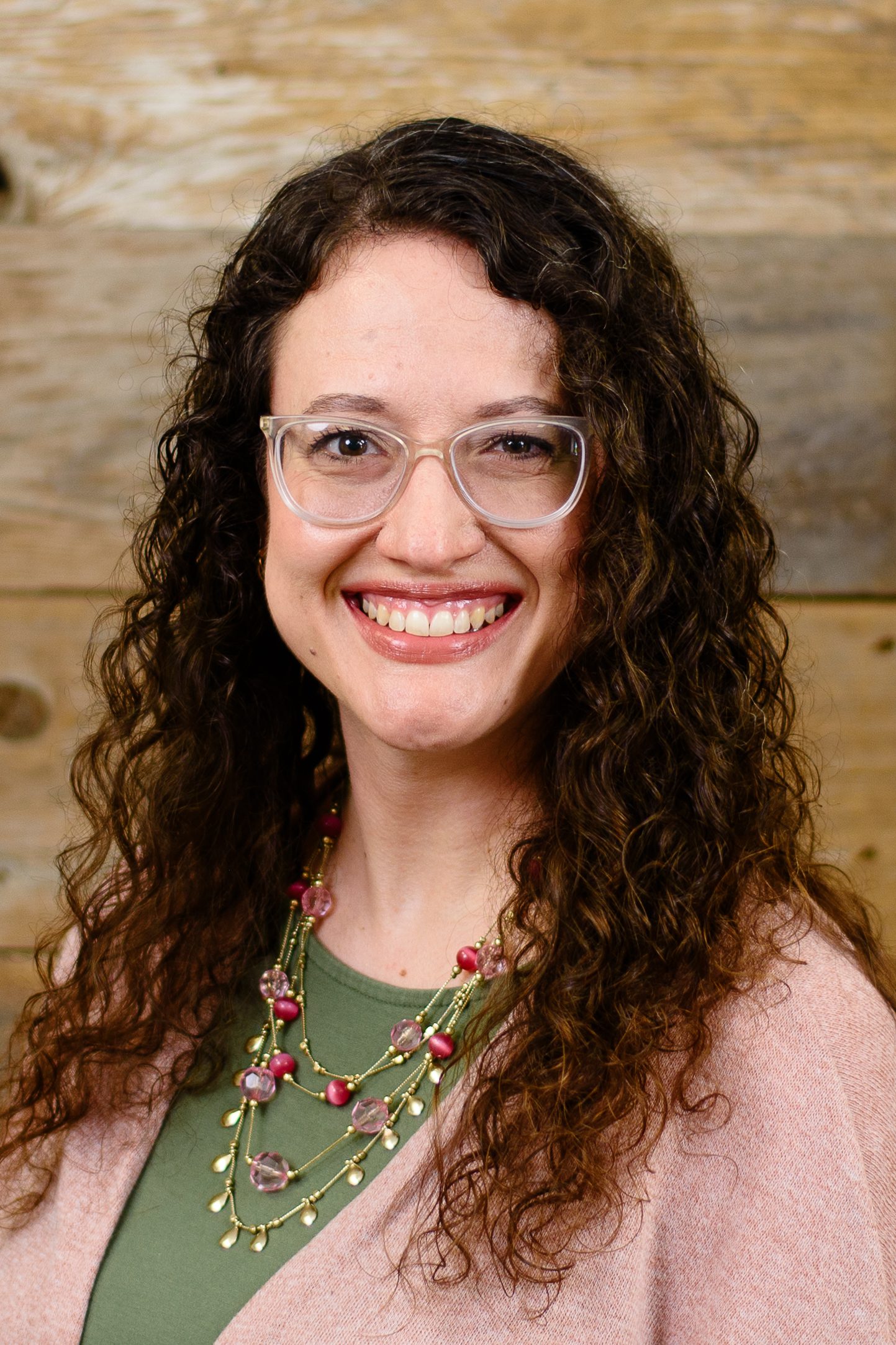
Janae Rempel Shafer is the Christian Leader associate editor and joined the CL staff in 2017. Shafer is an award-winning writer, receiving multiple awards from the Kansas Press Association and Evangelical Press Association. A Tabor graduate with a degree in communications and religious studies, she and her husband, Austin, attend Ridgepoint Church in Wichita, Kansas.


 have collaborated with immigrant congregations- most recently, through CORD.)